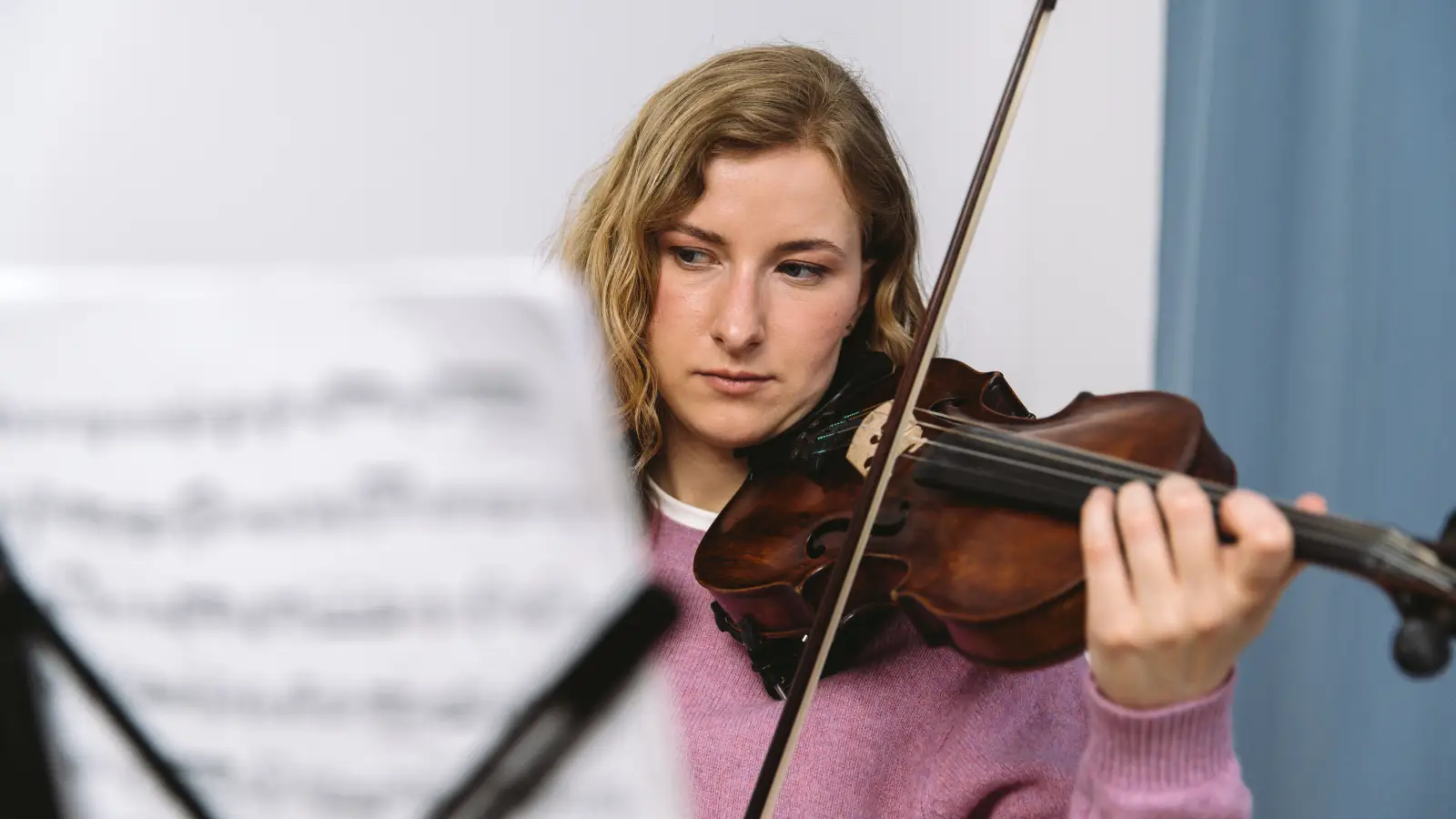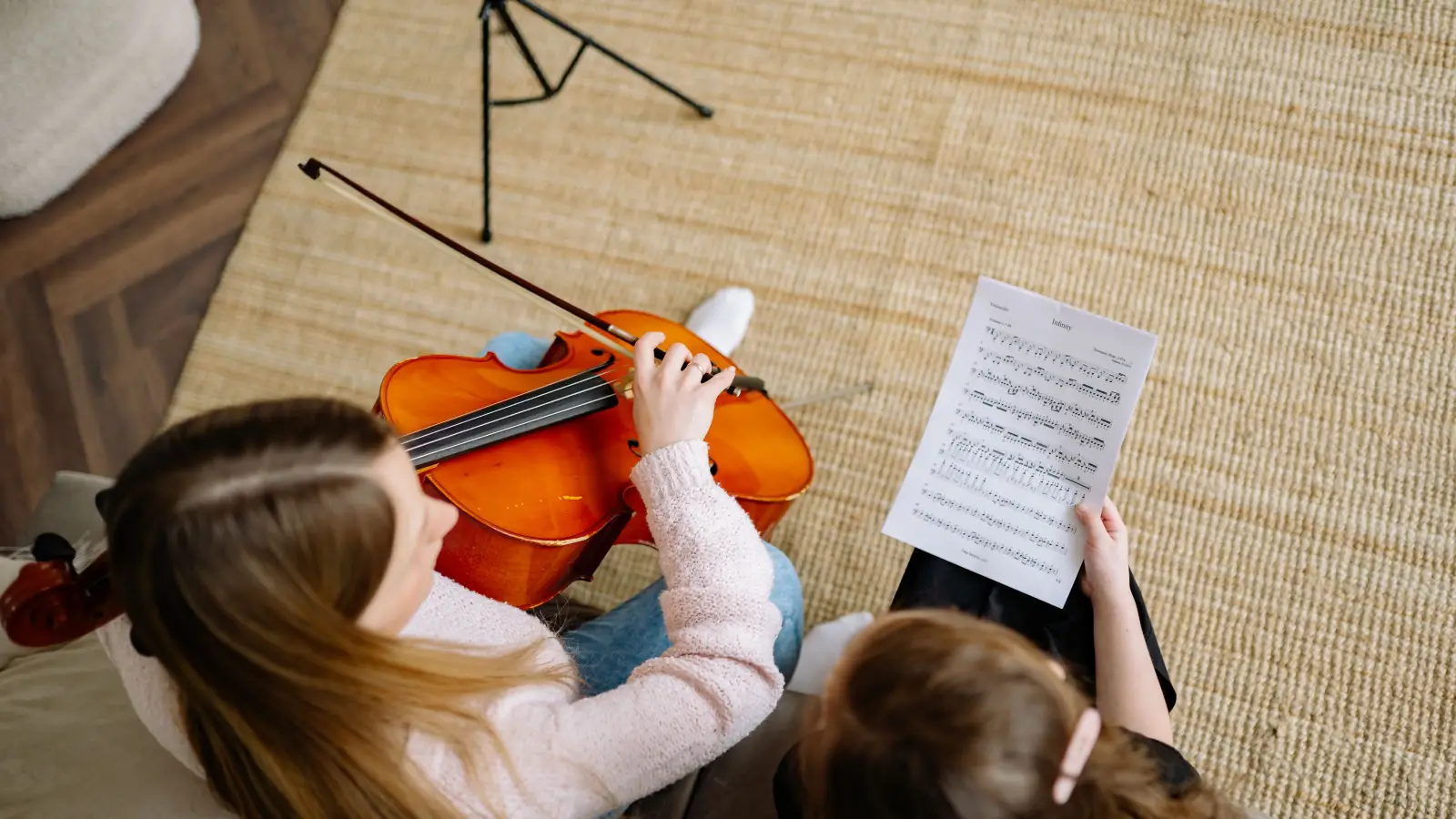
If you’re struggling through your first violin practice, you’re not alone — and you’re not behind. This 7-day plan takes the early awkwardness and turns it into tiny, confidence-building wins. By the end of the week, you’ll hold the instrument comfortably, draw a steady bow, and produce a clean, open-string tone — without ever learning a tune. All you need is a violin, a bow, rosin, and 15 minutes a day.
The plan is built specifically for the adult who worries they started too late. Every day hands you one small, achievable goal. Nothing feels rushed, nothing feels like a performance. It’s just a week of quiet victories that quietly stack up into genuine comfort.
The Only Gear You Need (and What Can Wait)
- A full-size or correctly sized violin and bow (borrow or rent to start; avoid cheap “violin-shaped objects” that won’t stay in tune)
- Rosin (typically a light rosin for beginners; it comes with many rental outfits)
- A shoulder rest (optional, but it helps many adults find a comfortable hold)
- A free tuning app (like Pano Tuner, GuitarTuna set to violin, or Tunable)
- A quiet room where you can stand or sit without being self-conscious
- A chair without armrests (if sitting)
- A phone holder or music stand so you can see the day’s checklist hands-free
Many adults feel they need to buy everything upfront. You don’t. Start with the essentials; the rest can follow once you’ve built confidence. Sheet music, a metronome, and a dedicated teacher can all wait. You also don’t need a carbon-fiber bow, a fancy chinrest, or any gadget that promises to fix your posture.
Your 7-Day Confidence Plan
Day 1: The Case, Your Body, and Silence
Open the case. Learn to pick up the violin by gripping the neck with your non-dominant hand — fingers over the fingerboard, thumb on the back of the neck (the lifeguard grip). Stand or sit with both feet flat, shoulders relaxed. No bow yet. Hold the violin this way for 30 seconds at a time, then rest.
Why it matters: That first touch can feel intimidating. Handling the instrument calmly removes the fear of dropping it, and paying attention to your posture without the bow’s distraction lets you notice where tension hides.
Watch out for: Shoulders creeping up toward your ears, a white-knuckle grip on the neck, or holding your breath. If your mind wants to rush, remind yourself that calm repetition today builds a steadier foundation than hurried attempts.
Day 2: The Violin Hold Without the Bow
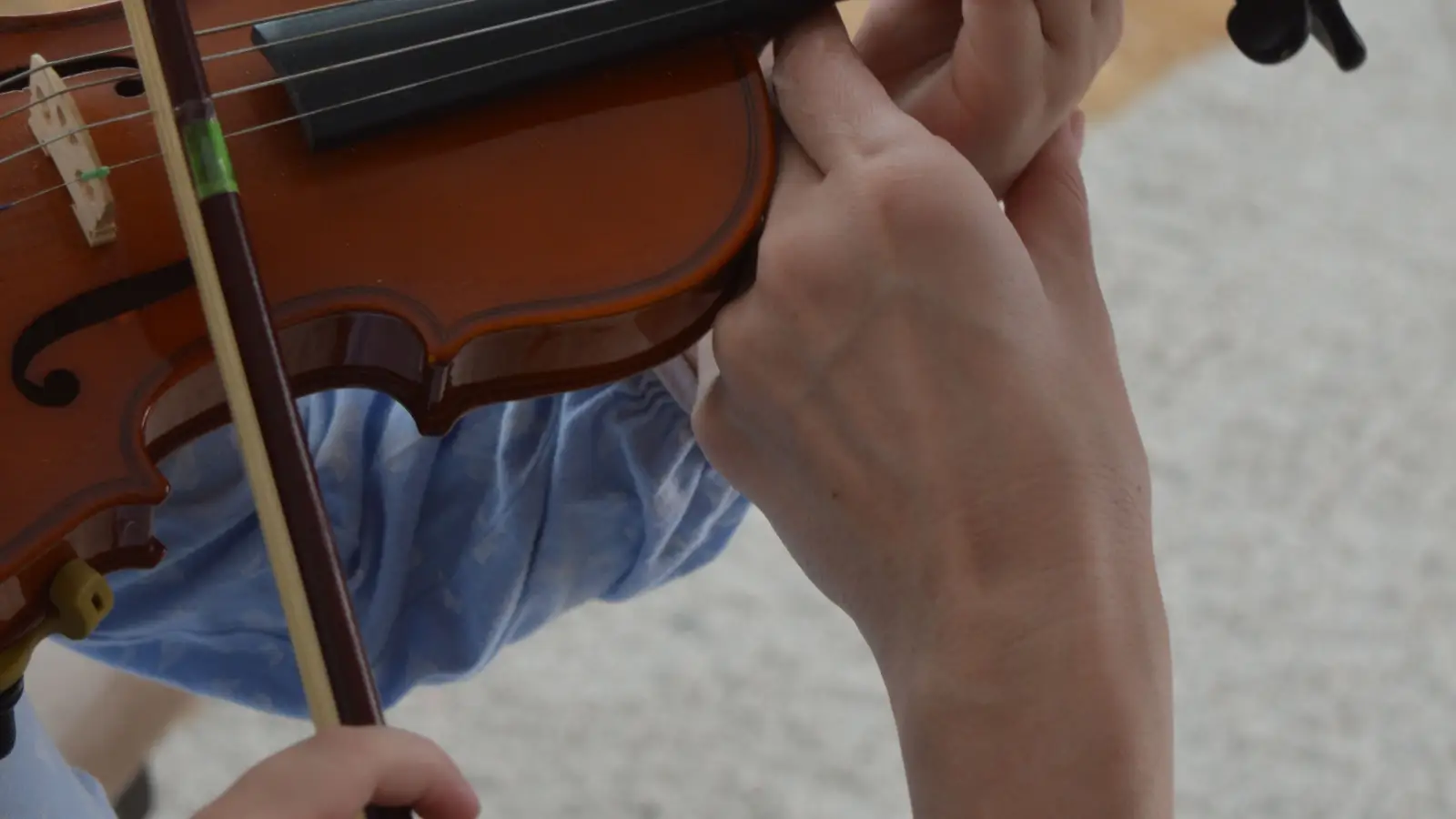
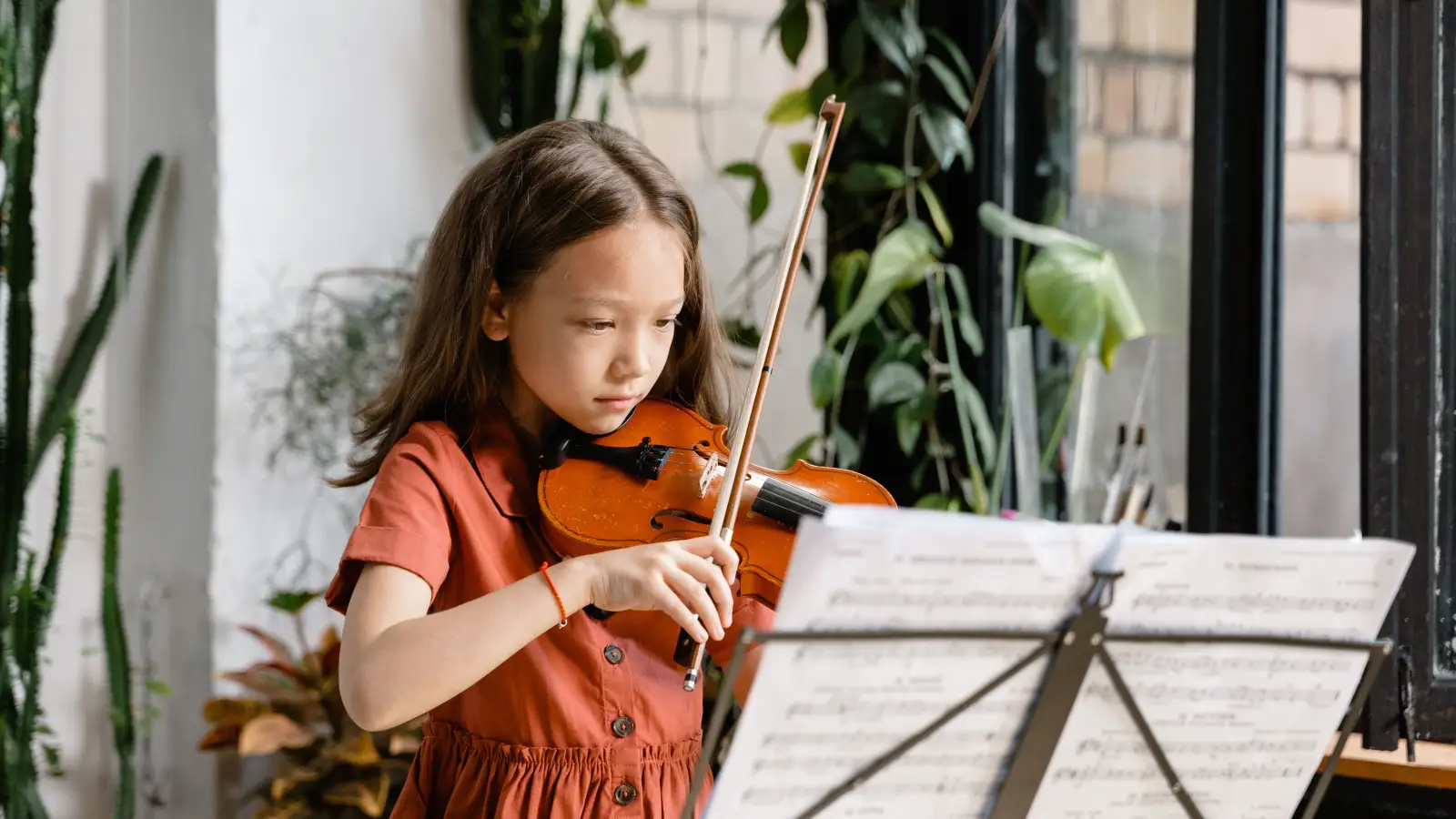
Attach the shoulder rest if you use one. Place the violin on your left collarbone, the back of the instrument flat against your body. Gently lower your head onto the chinrest — the weight should be minimal, just enough to stabilize. Support the neck lightly with your left hand. Hold this position for 10 to 15 seconds, breathing normally, then release. Repeat 5 times.
Why it matters: Adult bodies often fight the chinrest by clenching the jaw or hiking the shoulder. Isolating the hold without the bow teaches a relaxed, sustainable stance — and that’s a big win early on.
Watch out for: Pressing down hard with your chin, clenching your teeth, or letting the violin slide off the collarbone. The shoulder rest and your left hand should share the support so your head doesn’t have to do all the work.
Day 3: The Bow Hold Away From the Instrument
Take the bow (or a pencil for the first few tries). Form the hold: the thumb bends and rests on the stick, near the grip; the middle and ring fingers curl over the stick, with the pinky gently curved on top; the index finger wraps around, touching the stick between the first and second knuckle. Practice flexing and extending the fingers in a “windshield wiper” motion without tightening your entire hand.
Why it matters: The bow hold is the most counterintuitive grip for adult hands. Isolating it away from the violin gives your fingers a chance to learn the shape without the pressure of producing a sound.
Watch out for: A straight, locked thumb, a pinky that can’t reach (bring your hand farther up the stick), or a death-grip that makes the wrist rigid. If your fingers ache, take a break — the goal is comfort, not endurance.
Day 4: First Sound — Bow on an Open String
Rosin the bow lightly — two or three passes along the full length. Tune the violin using your app. Choose the A string (second from left). Place the bow at the frog, hair flat. Draw the bow slowly across the string between the bridge and the fingerboard, letting the weight of your arm do the work. Aim for a steady, resonant tone — not loud, not scratchy.
Why it matters: That first clean sound is a massive confidence boost. Success is a continuous, non-squeaking tone, no matter how quiet. If it wobbles, it still counts.
Watch out for: The bow skidding to a stop because of too much pressure or too slow a motion; a harsh scratch from a crooked bow; the bow dipping toward the bridge and producing a glassy squeal. A gentle, straight pull almost always solves it.
Day 5: Long Bows on All Four Strings
On each open string (G, D, A, E), draw a full bow stroke from frog to tip, aiming for 4 to 6 seconds of smooth, even sound. Listen for any drop in volume at the tip. Repeat two long bows per string, then rest your arm.
Why it matters: Long bows build the muscle memory for a straight, steady path. Without a melody demanding your attention, your focus stays on the bow arm’s fluidity — and every smooth stroke feels like a small triumph.
Watch out for: The bow creeping toward the fingerboard or bridge, the wrist collapsing as you near the tip, or the shoulder lifting on the up-bow.
Day 6: String Crossings — Clean Transitions
Practice moving from one string to the next without brushing the adjacent string. Start with a down-bow on D, rest, then an up-bow on A. Repeat D-A-D-A. Then try G-D-G-D. Use a tiny lift of the bow to change levels; pivot from the elbow, not the shoulder.
Why it matters: Clean string crossing feels like a puzzle, and adult learners often love that. It’s the first step toward melody, but still purely mechanical — no tune required yet.
Watch out for: Hitting the neighboring string on the way out, raising the whole arm too high, or changing bow speed right before the crossing.
Day 7: Your First ‘Performance’ — Holding a Note
Choose your most comfortable string — often the A or D. Play a single sustained note, softly, for a full 30 seconds. Focus on a straight bow, even speed, and a clean start and finish. That’s your performance. No one else needs to hear it.
Why it matters: This reframes “making music” as presence and control rather than a recognizable tune. An adult beginner who can sustain a pure tone has already built the core of a good sound. That’s a real achievement.
Watch out for: The urge to leap into “Twinkle Twinkle” or any simple song on Day 7. Wait until you can hold that note with ease; the tune will come faster and more beautifully when the comfort is already there.
Mistakes That Slow Confidence — and What to Do Instead
Skipping the Bow Hold Practice
It’s completely understandable: the sound feels like the main event. But skipping the isolated bow hold — jumping straight to bow on string — often leads to a crushed, squeaky tone and sore fingers. Give your fingers a full day of hold exercises with a pencil or bow before they ever meet a string. That rehearsal makes the first real bow stroke feel like a reward, not a fight.
Practicing for Too Long in One Day
Many adults believe that the longer they practice, the faster they’ll improve. In reality, a tense 45-minute session does more harm than three calm 15-minute sessions. Fatigue sets in, tension compounds, and frustration grows. Stick to 15 focused minutes. If you feel fresh, you can add a second short session later in the day, but never push past discomfort.
Ignoring Tension in the Neck and Jaw
Adults carry a lot of stress in the jaw, neck, and shoulders — and the chinrest becomes a clenching point. Every few minutes, drop your jaw slack for a moment, wiggle your shoulders, and check that your head isn’t pressing down. A tense upper body stiffens the bow arm, and that almost always shows in the sound.
Comparing Your Progress to a Child’s
A 7-year-old running through “Lightly Row” in a week can feel discouraging. Children’s hands are more malleable, and they absorb physical habits differently. Adults bring something equally powerful: focus, intentionality, and a deep appreciation for the small wins. Your path is different — not slower, just your own.
Forgetting to Tune the Violin Before Each Practice
An out-of-tune violin makes every sound grating, and it’s easy for an adult beginner to blame their own technique. Use a free tuner to check each string. Two minutes of tuning saves an entire practice session from sounding like a failure.
Using Too Much Rosin or Too Little
Over-rosining creates a gritty, choking sound; under-rosining makes the bow slip and refuse to grab the string. If you see a white dust trail on the violin or your fingers, wipe it gently. If you can’t get any tone after three slow passes, rosin a touch more. The right amount feels like just enough grip.
Questions Adult Beginners Ask Most
Is it too late to start violin as an adult?
Not at all. While finger flexibility and physical recovery may differ from a child’s, adults bring concentration, patience, and the maturity to follow a structured plan like this one. Many adult learners reach a satisfying, expressive sound. Starting later simply means you’re ready to commit on your own terms.
How long should each practice session be during this plan?
15 minutes daily. After Day 7, you can extend to 20–25 minutes, but stop before any real physical discomfort. Consistency over time matters far more than any single marathon session.
Why does my violin still sound scratchy on Day 4 or Day 5?
Scratchiness almost always comes from too much downward pressure, too little bow speed, or uneven rosin distribution. Try lighter contact, a slower steady draw, and check that the bow is straight and the hair is evenly coated. Also, make sure the violin is in tune — an out-of-tune string magnifies any scratch.
Should I get a teacher right away?
It’s not necessary for this first week of orienting yourself. This plan helps you get comfortable with the instrument before spending money on lessons. Once you can hold the violin and bow without constant tension, a teacher becomes invaluable for personalized feedback and for catching habits you can’t see yourself.
My fingers hurt from holding the bow. Is that normal?
Some tenderness is common as the hand learns an unfamiliar shape. If it’s a sharp, shooting pain, stop and check your hold: the thumb should be bent, not locked straight; the pinky curved and placed on top; the whole hand should cradle the bow, not squeeze it. Practice the hold away from the string; take breaks whenever you need them.
Can I use my phone’s built-in tuner instead of an app?
Most smartphones have a built-in tuner that handles violin frequencies, or you can download a free app. Just be sure it’s set to standard violin tuning (G, D, A, E). A clip-on tuner works too.
Where Confidence Takes You Next
Take a moment to recognize what you’ve done. Seven days ago, the violin might have felt foreign and fragile. Now it sits comfortably on your shoulder. You can draw a straight bow and pull a steady, clear tone from each open string. These are not small wins — they are the movements every violinist, from beginner to professional, relies on.
The natural next step is to bring this same patient, small-win mindset to learning a simple tune, like the first phrase of “Twinkle, Twinkle” or a one-octave D major scale. Seek out a teacher who understands adult learners, or work through the early exercises of a method book like Essential Elements for Strings or Suzuki Book 1. Above all, keep treating each tiny improvement as the whole point. The adult who holds onto that mindset ends up making music, not just hoping to.