A scratchy violin tone means the bow hair is not maintaining smooth, continuous contact with the string. Instead, the hair skids and catches in rapid cycles—the rasp you hear is the string vibrating in a chaotic pattern. Rather than lump every ugly sound under “scratchy,” this guide uses the specific character of your scratch—gritty, thin, wobbly, or faint—as a diagnostic signal. Each points to a different mechanical fault in your bowing, rosin, or setup, so you can correct it systematically.
Pinpoint Your Scratchy Violin Sound
Before fixing, identify which scratch you have. Play an open D or A at a moderate dynamic for 15–20 seconds. Which label matches?
- Gritty, sandpaper scratch – Rough, granular texture, persisting on both downbows and upbows even at slow speed.
- Thin, piercing scratch – Shrill, wire‑like tone that breaks up or becomes unbearably bright when you try to play louder.
- Wobbly, unstable scratch – Scratchy quality surges and fades; volume wobbles without control, and the bow sometimes bounces.
- Faint, whispery scratch – More surface noise than pitch; a constant airy hiss under a barely present note.
Each type maps to its own set of causes below.
Fixing a Gritty, Sandpaper Scratch
A scratch that feels like sand on the string comes from the hair gripping too aggressively or unevenly. The three most probable causes: over‑rosined or clumped rosin, worn‑out bow hair, and excess arm weight.
Over‑rosined or Clumped Rosin
How to confirm: Examine the hair under light. White powder streaking on the stick or tiny hard lumps on the hair indicate over‑rosining. Run a clean finger across the flat of the hair; a thick, gummy residue confirms rosin overload.
Exact fix: Use a dry, lint‑free cloth to wipe the entire hair from frog to tip with three firm passes. Do not use solvent—it damages hair. Loosen the hair slightly, wipe again, then test with a long open G. If grit remains, repeat once more.
Expected result: The rasp drops sharply. The string's fundamental emerges clearly without the persistent granular noise.
Worn‑Out or Broken Bow Hair
How to confirm: Against a dark background, look for many broken strands or hair that appears flattened and shiny rather than having a slight matte texture. Bow hair that has lost its microscopic scales cannot grip properly, even with correct rosin. Rehairing is typically needed every 6–12 months with regular practice.
Exact fix: A luthier must rehair the bow—there is no effective DIY method. As a short‑term patch, slightly more rosin may help for one session, but it cannot restore the grip.
Expected result: A fresh rehair restores smooth, even contact. The scratchy texture disappears entirely.
Excess Arm Weight Driving the Bow Into the String
How to confirm: Play a long downbow on the D string at a soft dynamic. If the scratch lessens when you let the bow's own weight alone produce the sound, you're pressing. Tension in the shoulder or locked elbow confirms over‑pressing.
Exact fix: Practice ghost bows—moving the bow just above the string—to learn the arm's path. Then lower the bow only until a clean tone appears. Keep the contact point about halfway between the bridge and fingerboard. Use a mirror to check that the bow isn't creeping toward the bridge under pressure.
Expected result: The gritty scratch softens into a warm, steady tone. Once you stay just below the pressure threshold that chokes the string, the scratch stops.
Fixing a Thin, Piercing Scratch
A thin, piercing scratch means the string is vibrating with too little mass. Usually the cause is insufficient rosin, bow speed without adequate weight, or a contact point too close to the fingerboard.
Insufficient Rosin
How to confirm: Wipe the hair clean to reset, then play a slow upbow on the A string. If the tone is faint and scratchy but a few fresh rosin passes immediately give it body, rosin starvation is the problem.
Exact fix: Apply 4–6 slow, full‑length strokes of rosin. Avoid sawing quickly in the middle—that creates uneven buildup. Test on an open string; add two more passes only if still thin, then stop to avoid over‑rosining.
Expected result: The piercing quality rounds out. The note gains a richer, fuller core.
Bow Skating Too Fast With Too Little Weight
How to confirm: Play a short downbow on the D string at a comfortably slow speed, then repeat at double speed without adding pressure. If the faster stroke sounds thin and scratchy, speed‑without‑weight is the culprit.
Exact fix: Slow down. With a metronome at 60 bpm, bow one full stroke per beat using just enough natural arm weight for a steady tone. When that's clean, increase speed in 5‑bpm increments, always checking that the tone stays full.
Expected result: The bow feels more connected to the string. The piercing scratch is replaced by a sound that projects without harshness.
Contact Point Too Close to the Fingerboard
How to confirm: Watch the bow's placement while playing an open E (or your highest string). If the hair sits less than about a third of the way from the fingerboard to the bridge, the string's upper harmonics dominate, producing a bright, thin, scratchy tone.
Exact fix: Shift the bow toward the bridge until it is roughly halfway between bridge and fingerboard—the beginner's sweet spot. Keep the hair flat. Practice long bows while holding that contact point constant.
Expected result: The tone warms significantly. Scratchiness from under‑engaging the string's mass turns into a smooth, singing quality.
Fixing a Wobbly, Unstable Scratch
A wobbly scratch—where the rasp surges and fades—almost always originates in an inconsistent bowing motion. Common causes: uneven speed, a tense bow hold, or a warped bow.
Inconsistent Bow Speed
How to confirm: Record a scale on a phone. Listen for unintended volume swells or drop‑offs; those indicate bow speed variations.
Exact fix: Bow in front of a mirror, keeping the forearm relaxed and speed constant over full strokes. Use a metronome: one full bow per eight ticks at 60 bpm. Pay extra attention to the frog and tip transitions.
Expected result: The scratchy wobble flattens out. Sound stays steady, and later you'll control dynamics intentionally.
Tense Bow Hold Gripping the Stick Too Tightly
How to confirm: After a few minutes of playing, check your right hand. A white‑knuckled thumb or locked‑up knuckles signal excessive grip. Stiffness transmits every twitch to the bow, producing unstable, scritchy contact.
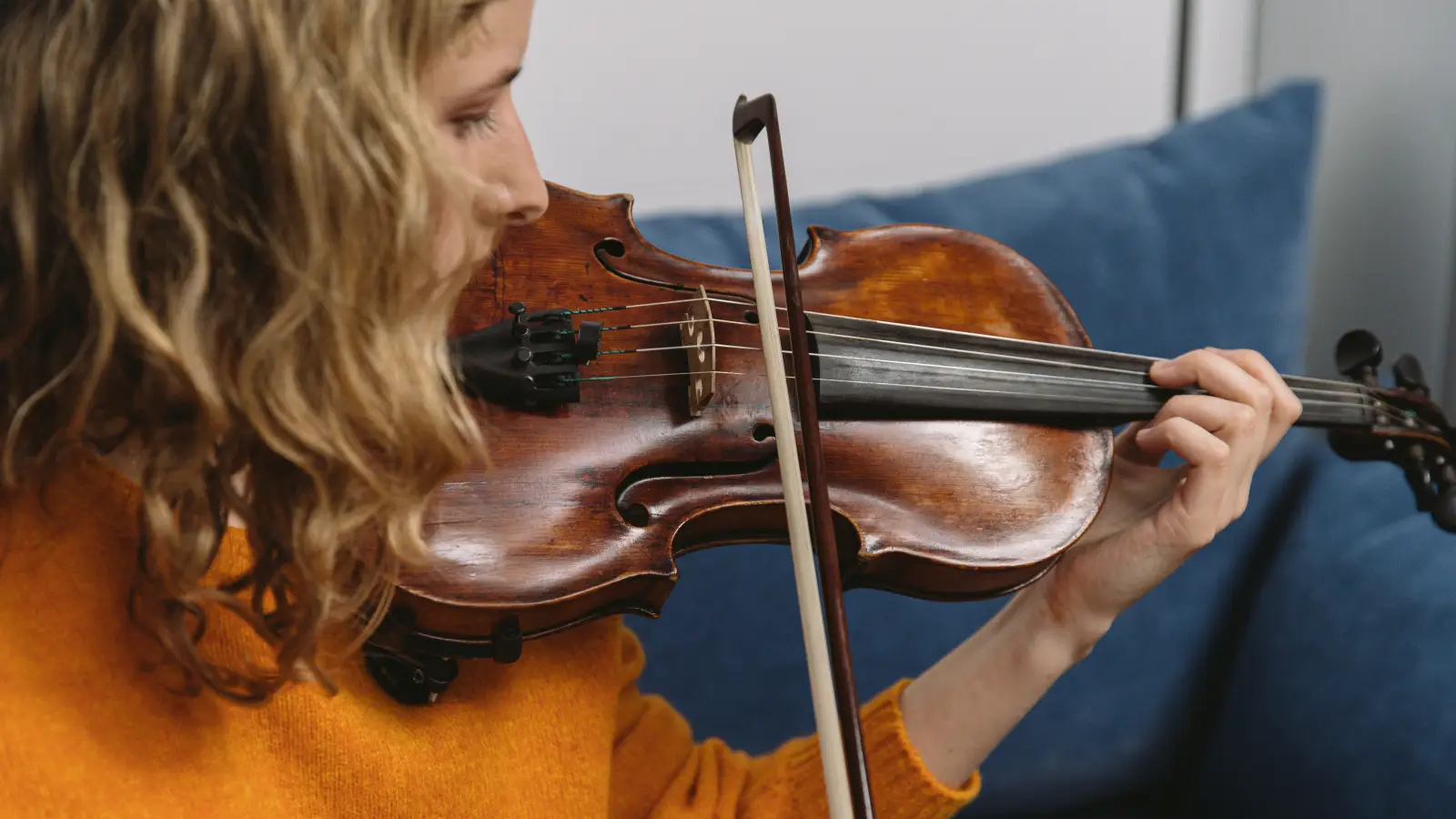
Exact fix: Reset the hold: thumb tip on the leather grip, opposite the bent first knuckle of the index finger. Pinky rests roundly on top. Practice “windshield wiper” movements with only the fingers to develop a supple hold.
Expected result: Wobbles diminish because the bow responds to string resistance without being jerked by a rigid hand. The sound stabilizes.
A Warped or Poorly Balanced Bow
How to confirm: Sight down the stick from frog to tip. A slight camber is normal, but a corkscrew twist or hair that touches the stick when tightened normally indicates warp. Also, if one end feels noticeably heavier, the bow will skitter.
Exact fix: No home fix for warp; take the bow to a violin shop. Minor warp might be corrected with rehair and camber adjustment. Severe warp requires replacement. For temporary relief, slightly looser tension may reduce skitter, but it's a hack.
Expected result: A straight, balanced bow removes the mechanical wobble source. The scratchy instability stops, and the instrument responds predictably.
Fixing a Faint, Whispery Scratch
A constant thin hiss beneath a note that never fully blooms comes from insufficient string engagement. The most likely culprits: too little rosin, slack bow hair, or old strings.
Too Little Rosin (Confirmation & Fix)
How to confirm: Slow upbow on the G string. If you hear only hiss and barely a pitch, rosin starvation is present. Add two passes and test; if the pitch blooms, confirmed.
Exact fix: Build a base layer with 5–6 full‑length strokes, as described earlier. After several rosin‑skipping sessions, the hair may be nearly bare.
Expected result: The G string stops whispering and produces a solid, resonant note. The faint scratch is replaced by a present tone.
Bow Hair Too Loose
How to confirm: When tightened, a pencil tip should fit between the hair and the stick at the middle, but not your pinky. If the hair almost touches the stick or the stick is completely straight, you cannot transfer enough weight to the string.
Exact fix: Turn the screw clockwise until that pencil‑tip gap appears. Do not overtighten. Tap the hair on the back of your hand—it should feel springy, not slack.
Expected result: The bow immediately grabs with more authority. The whispery hiss becomes a clear, full note.
Old, False‑Sounding Strings
How to confirm: Strings older than 12 months or with broken windings may be dead. Pluck an open string; a dull thud with short sustain points to dead strings.
Exact fix: Replace the full set. A beginner may have a teacher or luthier handle the first change to avoid tuning peg troubles. Expect frequent retuning for a few days as new strings stretch.
Expected result: New strings restore full vibration. The whispery scratch disappears because the string now responds properly.
Quick Fixes to Try First—and When They're a Waste of Time
Some simple actions can clear a superficial scratch before you launch into detailed diagnostics. They don't hurt, but they're not universal cures.
- Wipe down the strings after every practice. Rosin dust caked on strings amplifies any scratch. A dry microfiber cloth removes dust and sometimes resolves a mild gritty scratch entirely.
- Check bow tension. Beginners often leave the bow tightened between sessions, stretching the hair unevenly. Proper tension alone can rectify many faint or unstable scratches.
- Clean hair, then apply fresh rosin. Rosining over a cake of old rosin is like waxing a dirty floor. If the hair hasn't been cleaned recently, wipe it first, then rosin.
Honest note: These resets help when the problem is superficial buildup, slack tension, or routine forgetfulness. They waste your time when the scratch stems from a mechanical fault—worn hair, a warped stick, dead strings, or a deeply ingrained bowing habit. If 10 minutes of quick fixes don't bring clear improvement, move to the specific diagnosis paths.
Habits That Keep Scratching Away for Good
Once the tone is clean, these habits prevent the scratch from returning:
- Rosin deliberately. Use slow, even passes and test the tone after every few strokes. Stop when the bow grips enough—don't aim for an arbitrary number.
- Clean strings and bow hair after each session. A one‑minute wipe stops rosin cake‑up, the leading accelerator of gritty scratches.
- Open‑string tone building. Spend the first three minutes of every practice playing long, slow bows on each open string, focusing on constant contact point and even, relaxed pressure. This trains the right arm to stay in the clean‑tone zone automatically.
- Monitor bow hair. Once a month, check for excessive breakage or shiny, smooth texture. A bow overdue for rehair will produce scratching no matter how good your technique.
- Change strings on a schedule. Log string change dates. Even strings that look fine lose vibrational life. Replacing them every 6–12 months prevents the faint, airy scratch from creeping back.
When Nothing Works: Gathering Evidence and Getting Help
If you have worked through the diagnostic steps, applied the fixes, and the scratch persists, gather these details before seeking outside help:
- Audio recording: 20–30 seconds of an open string and a simple scale, capturing the scratch at its worst.
- Bow inspection notes: Age, last rehair date, any visible warp, and how it tightens.
- String age and type: Brand, gauge, and last change date.
- Setup facts: Violin model, bridge height, any recent soundpost or tailpiece adjustments.
Take this information to:
- A violin teacher or tutor. One in‑person lesson can reveal whether the issue is technique or equipment. A teacher observes bow hold and arm mechanics in real time.
- A reputable violin shop or luthier. They objectively evaluate bow camber, hair condition, bridge, and string height, and perform any needed repairs.
- Online learning communities. Forums like Violinist.com or Reddit's r/violinist can offer troubleshooting if you post your recording and inspection notes. However, online advice cannot replace hands‑on observation.
A persistent scratch that resists all the standard fixes is almost always solvable once someone experienced watches and listens. Rather than guess, collect evidence, then get expert input.