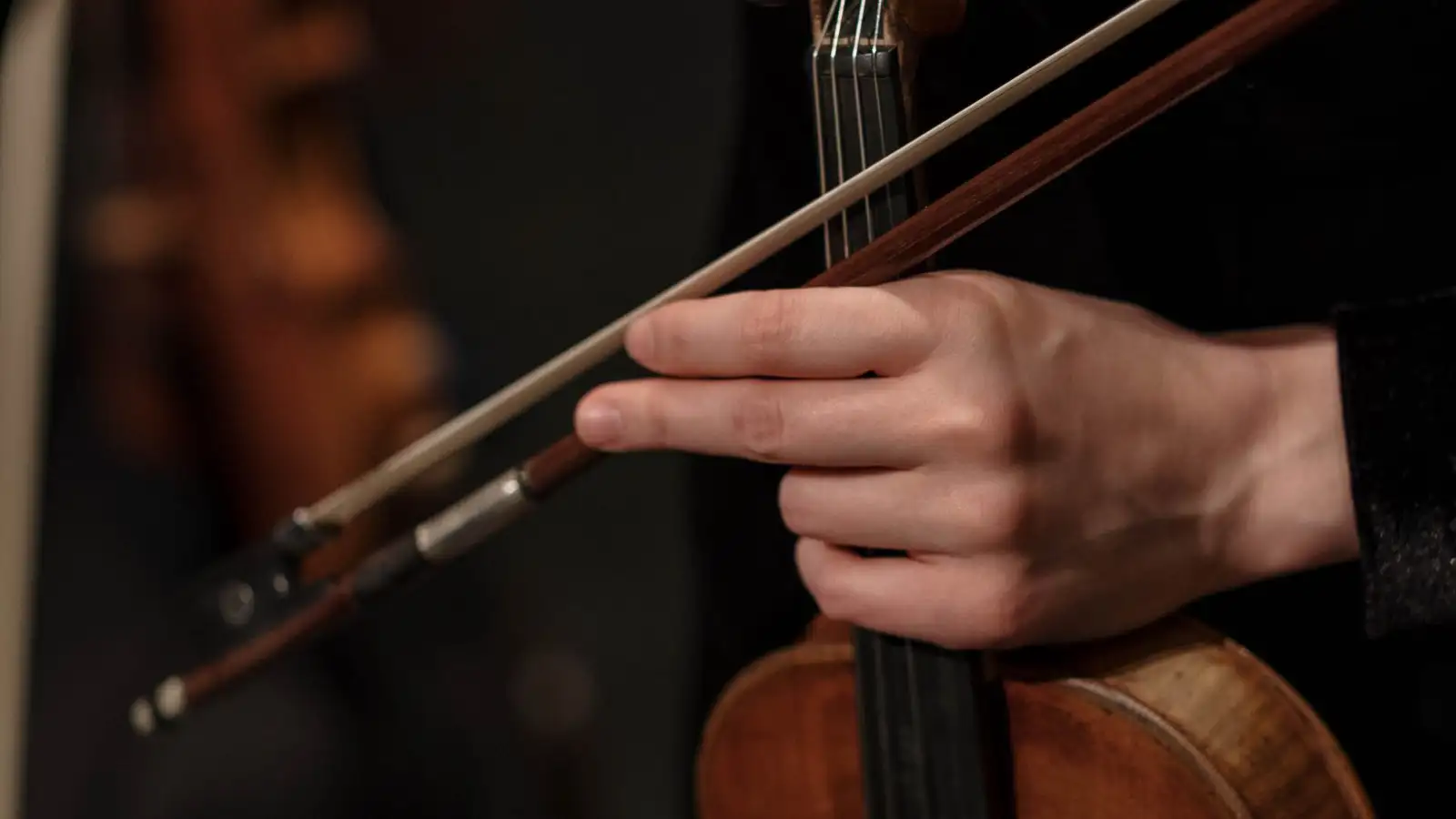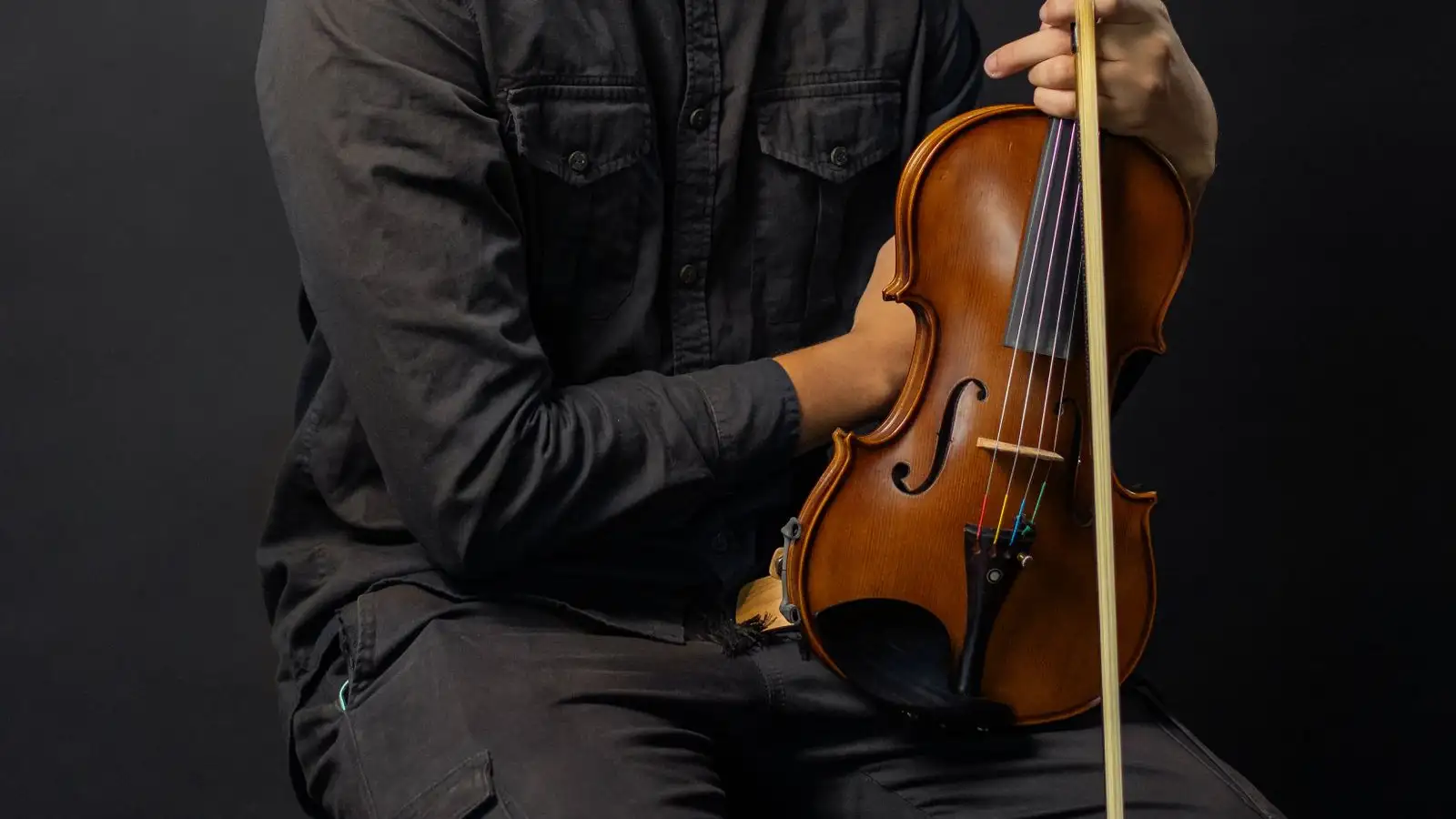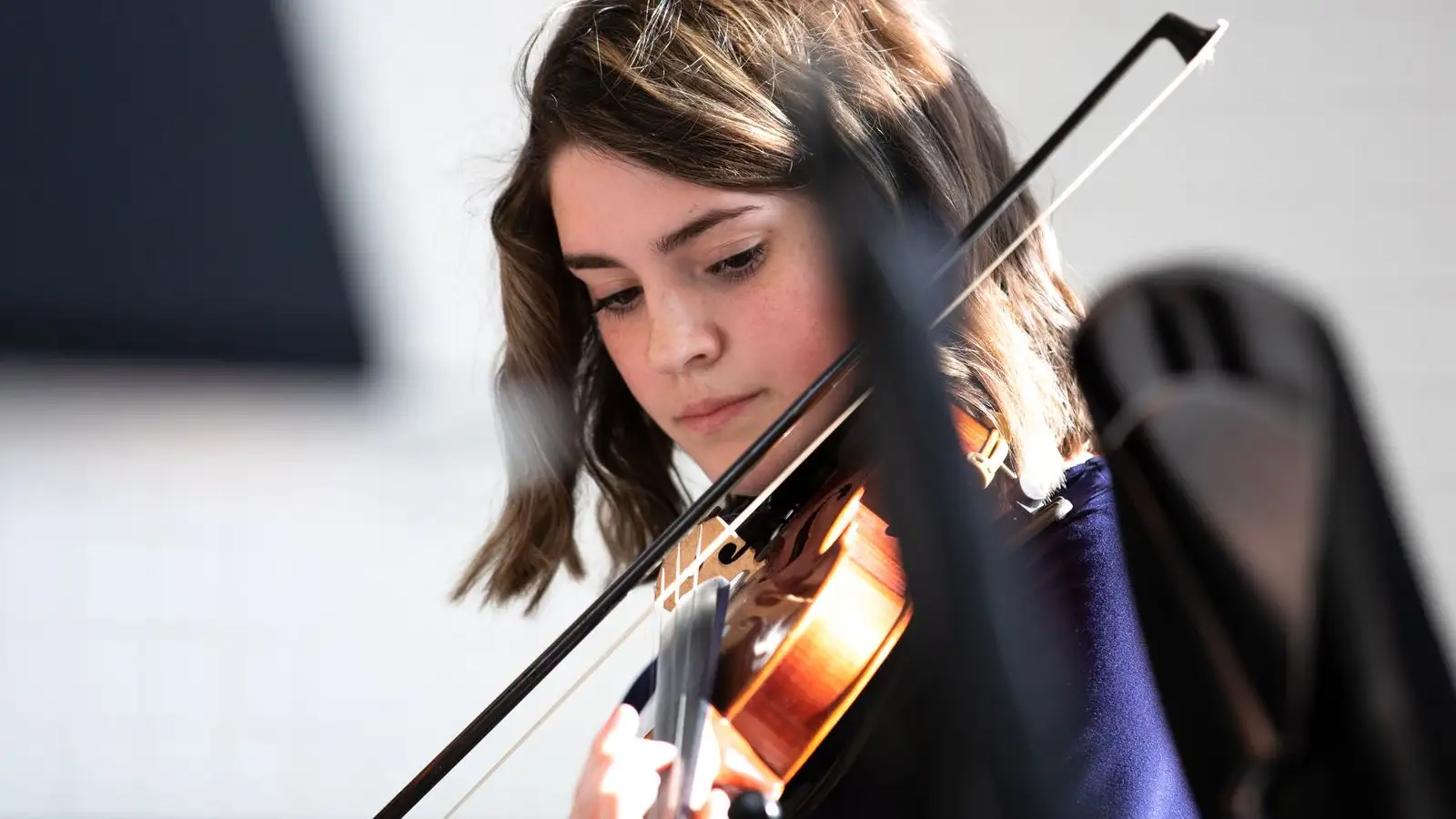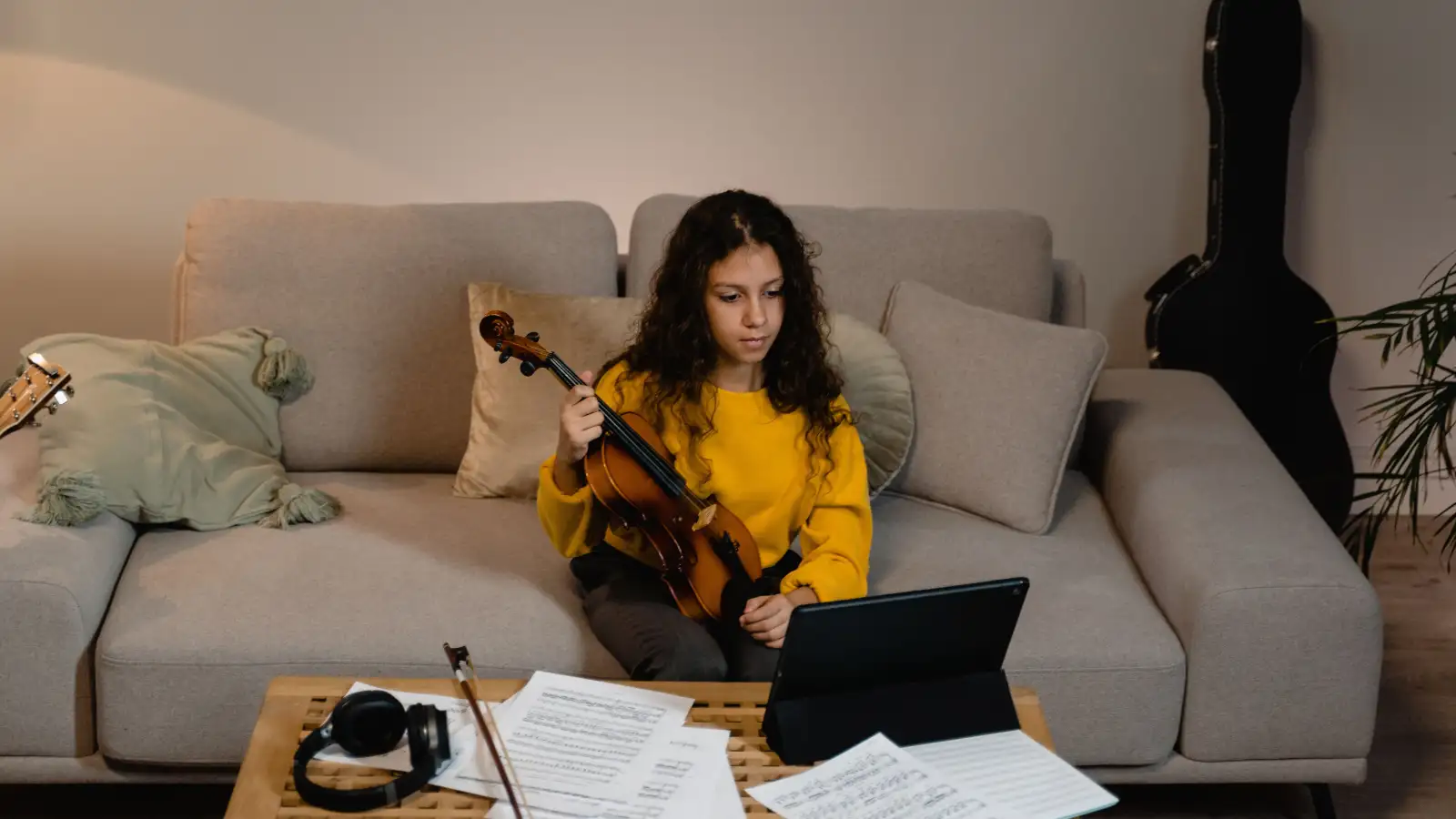
How to Hold a Violin Bow So Your Hand Finally Relaxes
A bow hold works by balance, not grip. Here's what each contact point does, what relaxed really means, and self-checks you can run alone at home.
A bow hold works by balance, not grip. Here's what each contact point does, what relaxed really means, and self-checks you can run alone at home.
Set the metronome slower than you can play, loop two bars, and read each click as data. A slow-tempo sequence that turns the tick into a diagnostic tool.
How steel, synthetic, and gut violin string cores change tone, tuning stability, and durability for adult beginners, and how to choose between them.
Reaching for the G string shouldn't drag your violin around. Here's how the left elbow and forearm keep the instrument steady while the hand travels.
Shoulder rests sorted by design principle: how rigid frames, foam wedges, inflatable bladders and shoulder cushions change where the violin contacts your body.
Three physical tests you can run on your own bow hand to find out if you're gripping too hard, and why squeezing harder never makes the violin louder.
Light, medium, and heavy violin strings change how hard the string is to press. Here's how tension, gauge, and setup decide what your fingers feel.
Rosin hardness, not color, decides how your bow grips in cold dry air or hot humidity. Learn how to read your climate and pick a cake that works.
Set violin shoulder rest height, tilt, and placement in playing position, then run a release test to confirm the fit. Change one variable at a time.
Most bow-hold problems trace back to one finger that quietly leaves the stick. Test each finger at the frog to find the one that quit on you.