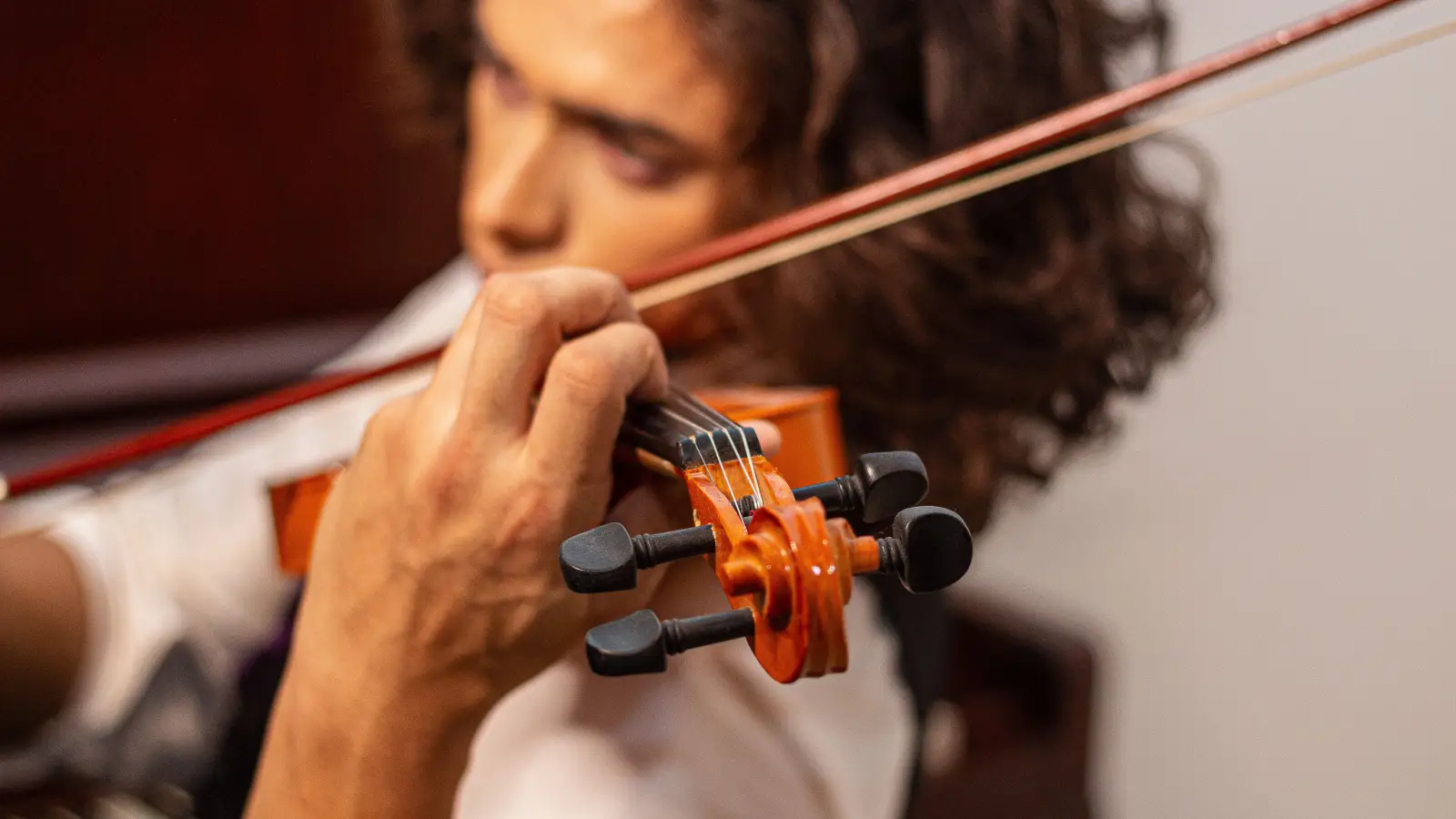
Why Most Beginner Violinists Change Their Chinrest Right Away
That first chinrest rarely fits. Learn how chinrest shape, tailpiece weight, and endpin stability affect comfort, tuning, and tone — and why a quick swap makes practice possible.
That first chinrest rarely fits. Learn how chinrest shape, tailpiece weight, and endpin stability affect comfort, tuning, and tone — and why a quick swap makes practice possible.
An electric violin's true cost goes far beyond the price tag. Amplifiers, headphones, cables, and maintenance can double your spending. Plan your budget before you buy.
Learn quarter, half, whole, eighth, and dotted half notes through bow-control exercises that pair rhythm with specific bow lengths and directions. Start with the whole-note full-bow drill.
Rosin isn't just sticky stuff—it creates a rapid stick-slip grip-and-release that vibrates the string. See how a wet finger on a wine glass explains every bowed note.
Pinpoint your scratchy, whispery, squeaky, buzzy, or inconsistent violin tone—then match it to the right rosin fix. No technique changes needed.
Learn the teacher-vetted method using a yardstick from neck to palm, with posture tips and size matching. Get an accurate arm measurement for the correct violin fit.
A collapsing left wrist causes intonation drift and hand fatigue. Use this 3-minute wall test to spot the problem before it becomes a permanent habit.
A worn winding doesn't just look bad—it moves your bow’s balance point, increases fatigue, and reduces agility. Learn how to check yours and decide if it's time for a fix.
A tense shoulder muffles violin resonance. Learn the one posture adjustment that releases the collarbone and jaw for a fuller, richer tone. Step-by-step checklist inside.
These five habits steal practice minutes without progress. Studio-tested fixes for each, ranked by the damage they do. Turn your session around today.