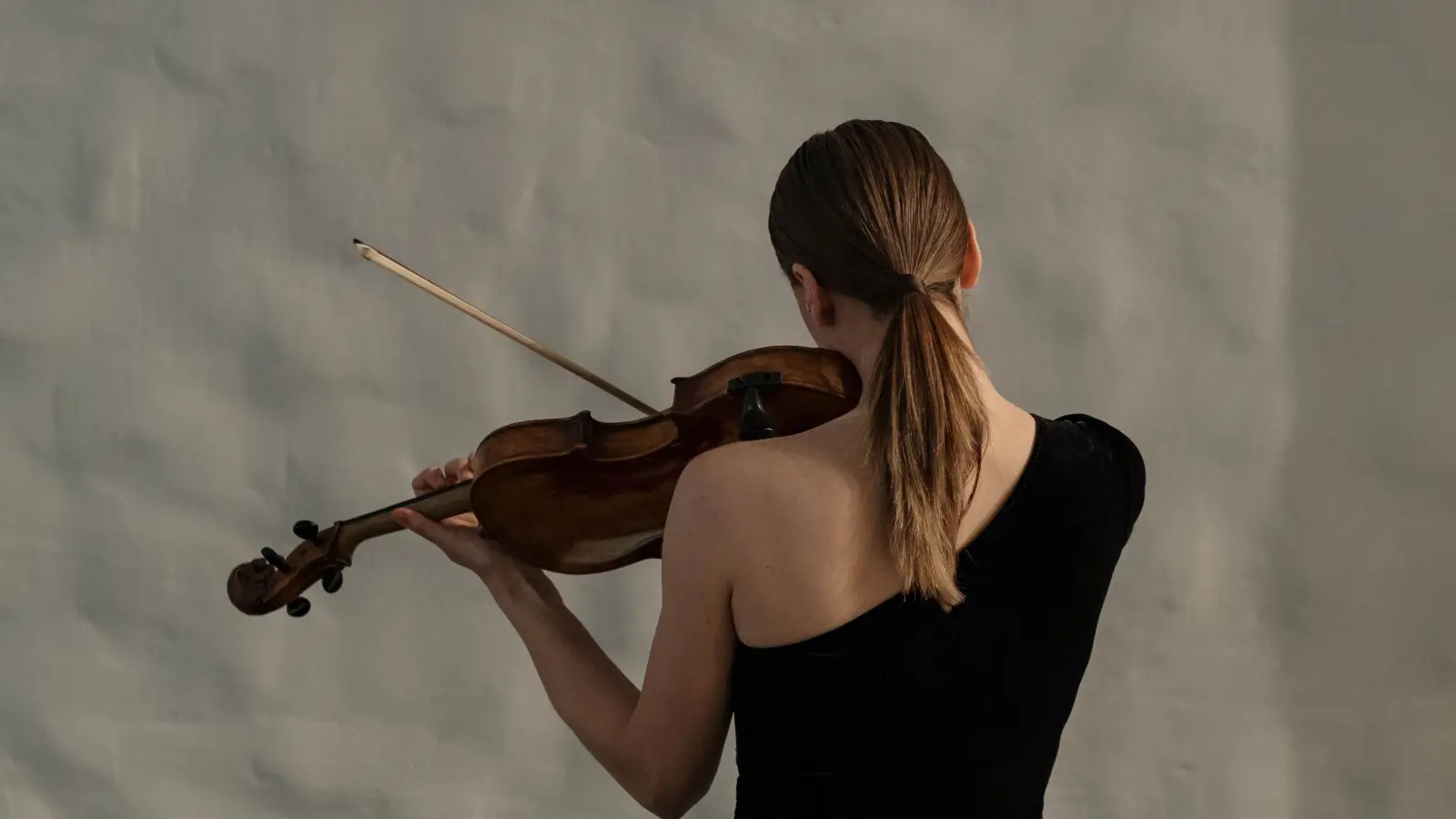
Violin Posture for Adults: A Step-by-Step Guide
Build a tension-free violin hold by aligning feet, hips, spine, shoulders, and head in order. A step-by-step posture method adult beginners can trust.
Build a tension-free violin hold by aligning feet, hips, spine, shoulders, and head in order. A step-by-step posture method adult beginners can trust.
Stop reaching for the damp cloth—it's slowly clouding your violin's finish. Learn the dry microfiber method that lifts rosin dust without harming the varnish.
Choose your first violin strings based on material, gauge, and tension—not brand names. A step-by-step guide that stops analysis paralysis and helps you find strings that fit your instrument and your hands.
Shoulder rest fit determines bow arm freedom and left-hand relaxation more than most players realize. Learn to adjust height, tilt, and placement the way a teacher would.
Think fine tuners are a beginner's crutch? Discover why professional string players rely on them for micro-adjustments, faster tuning, and dead-on pitch — and how you should too.
A poorly fitted bridge steals tone and makes playing harder. Learn how to spot the silent warning signs, find the cause, and fix it before it gets worse.
A four-phase daily practice framework (calibrate, drill, play, reflect) that treats each session as a deliberate neural-pathway experiment. Short, sustainable, and built for adult learners.
A 6-year-old whose interest could fizzle and an adult already committed point to opposite rental plans. The decision hinges on one question: will they still be playing in 12 months?
Most beginners quit violin because they can't practice quietly. Here's why an electric violin for the first 3 months leads to faster progress and less frustration.
Reading violin music while playing isn't about speed — it's about reading intervals instead of note names. Learn the look-ahead shortcut that makes it click.